Quick answer
Dense tule fog is most common in Fresno in December and January, with about 11 foggy days a month on average, according to the National Weather Service. Caltrans and the DMV say to slow down, drive on low beams, never use only parking or fog lights, and avoid stopping on freeway shoulders. If anyone is hurt or you are stopped in a traffic lane, call 911.
When tule fog hits Fresno
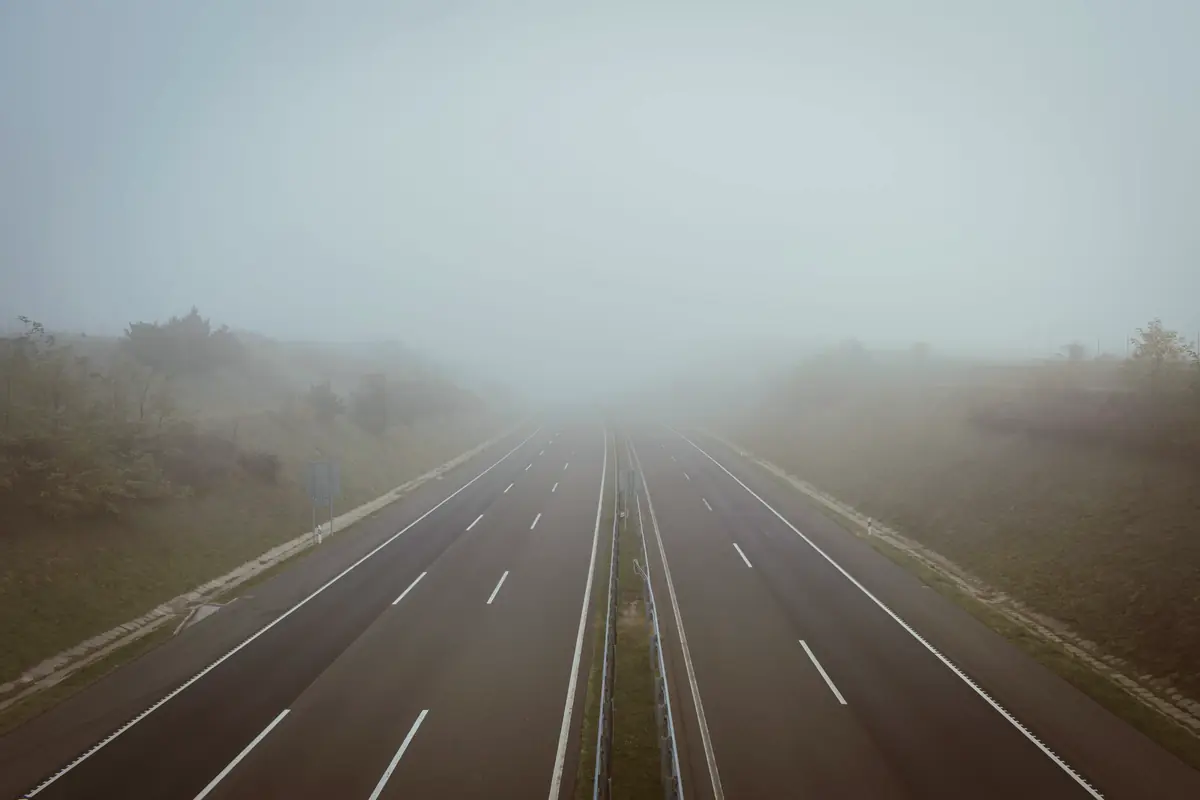
Caltrans describes tule fog as thick ground fog that covers the Central Valley through fall, winter and early spring, after rains saturate the soil. The National Weather Service (NWS) office in Hanford counts days when fog cuts visibility in Fresno to a quarter mile or less:
| Month | Average days |
|---|---|
| October | 0.6 |
| November | 5.2 |
| December | 11.0 |
| January | 11.5 |
| February | 5.1 |
| March | 1.5 |
| April | 0.2 |
| May to September | 0 |
That adds up to about 35 dense-fog days a year. The record run is 16 days in a row, from December 13 to 28, 1985.
Before you leave
The California Driver Handbook says it is best to avoid driving in heavy fog and to consider postponing your trip until it clears. If you have to go, the tips below come from the Handbook and from Caltrans.
Driving in fog: what Caltrans and the DMV advise
- Slow down. Caltrans says nearly three in four fog-related collisions are connected to driving too fast. The DMV says to be able to stop within the distance you can see.
- Drive on low beams. Never drive with only parking lights or fog lights, and avoid high beams, which reflect back as glare.
- Turn on your headlights whenever fog or low visibility (1,000 feet or less) makes you run the wipers continuously, the DMV says.
- Leave more room between you and the car ahead, and use your wipers and defroster.
- Do not pass long lines of traffic, and avoid changing lanes unless you must.
- Use the fog line on the right edge as a guide.
- At intersections, lower your window and listen for traffic you cannot see.
Exit markers: 3, 2, 1
Caltrans says highways prone to fog have reflective markers on the right shoulder that count down to an exit: three markers 2,100 feet before it, two at 1,400 feet and one at 700 feet.
If you have to stop or your car stalls
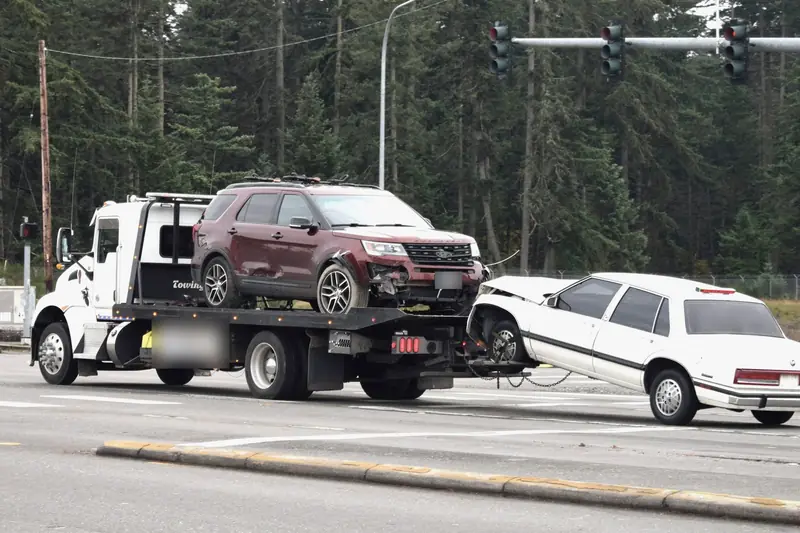
If anyone is hurt or you are stopped in a traffic lane, call 911.
The CHP lists stalled vehicles blocking the roadway among the reasons to call 911.
The DMV's advice for fog too thick to drive in is to pull completely off the road, turn on your hazard lights and wait for conditions to improve. Caltrans adds a warning: avoid stopping along freeway or highway shoulders. On a freeway, both pieces of advice point the same way: take the next exit and stop well off the road.
If the car fails before you reach an exit, use the DMV freeway steps:
Right shoulder
Get as far onto the right shoulder as you safely can, flashers on.
Call
Dial 511 or use a call box. Call 911 if you are in a lane.
Stay buckled
Stay inside with your seat belt on until help arrives.
Or get away
If the shoulder is too narrow, there is a guardrail or a safe area away from the lanes, the DMV says it can be safer to get out and stay away.
Since January 1, 2026, Vehicle Code §21809 requires drivers approaching any stopped vehicle with flashing hazard lights, cones or flares to move to a lane not next to it or slow to a safe speed. In fog, do not count on others seeing you in time: off the road is better than the shoulder.
More on calling for help, the Freeway Service Patrol and what to tell dispatch is in car broke down on the freeway. If the stall ends in a collision, see after a car accident in Fresno.
A tow out of the fog
Farmer's Towing answers 24/7, fog or clear, with 24-hour emergency towing across Fresno, Clovis, Madera and the Central Valley. Give dispatch the route, your direction, the last exit or exit marker you passed and which shoulder you are on. Dispatch gives you an arrival time for your location: (559) 990-9526.
Common questions
What is tule fog?
Thick ground fog that covers California's Central Valley in fall, winter and early spring, usually after rains have soaked the soil, as Caltrans describes it.
What months does tule fog happen in Fresno?
Mostly November through February, according to NWS Hanford. December and January average about 11 dense-fog days each; May through September average none.
Should I use high beams or fog lights in tule fog?
Use low beams. Caltrans and the DMV say to avoid high beams, which cause glare, and never to drive with only parking lights or fog lights on.
What should I do if the fog is so thick I can't see?
Pull completely off the road, turn on your hazard lights and wait, as the DMV advises. Caltrans says to avoid stopping on freeway shoulders, so take an exit if you can.
Does Farmer's Towing tow during heavy fog?
Yes. Dispatch answers 24/7 at (559) 990-9526. Tell us the route, direction and last exit you passed. If you are stopped in a traffic lane, call 911 first.
Sources
- Caltrans District 3, news release 23-137: tule fog safety tips (December 22, 2023)
- National Weather Service Hanford, Fresno Fog Facts
- National Weather Service Hanford, Number of days with dense fog by cool season, Fresno
- California DMV, California Driver Handbook: Safe Driving (fog or heavy smoke)
- California DMV, Teen Driver Tips (fog, headlights and low visibility)
- California DMV, California Driver Handbook: Safe Driving (vehicle stops working on the freeway)
- California Vehicle Code §21809 (Move Over, as amended by AB 390, effective January 1, 2026)
- California Highway Patrol, Frequently Asked Questions (when to call 911)