Quick answer
A wheel lift raises one axle and the other two wheels roll on the road; a flatbed carries the whole car. The owner's manuals we checked require all wheels off the ground for all-wheel-drive models and warn that an electric motor turned by the wheels can generate electricity and be damaged. Your manual's "Towing" page is the final word for your car.
Two ways to move a car
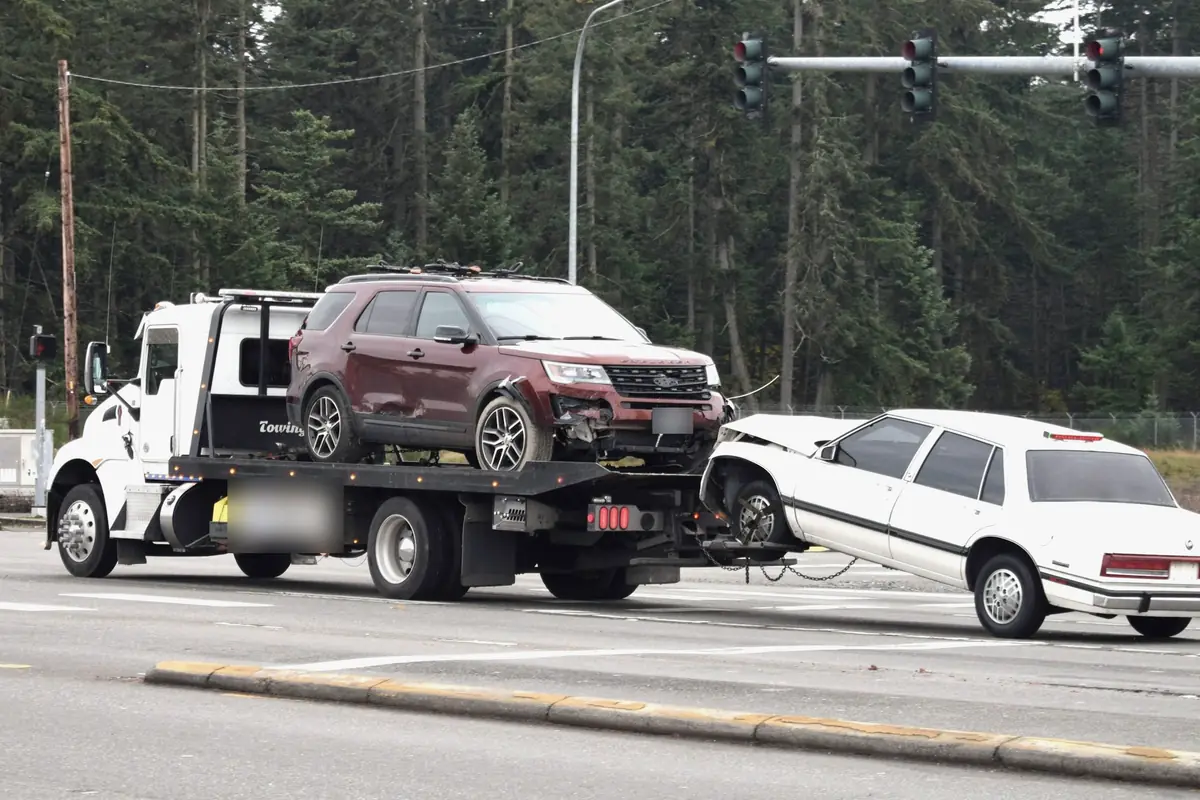
| Feature | Wheel lift | Flatbed (roll-back carrier) |
|---|---|---|
| How it works | A metal arm cradles two wheels and lifts one end of the car | The bed tilts down, the car is pulled or driven on and carried |
| Wheels on the road | Two, unless dollies go under them | None |
| Fits well for | Front-wheel-drive cars with the front lifted, tight spots, quick moves | AWD, electric, low or damaged cars, longer trips |
| Watch out for | Low bumpers and the wrong end lifted | Very low cars need a slow, careful loading angle |
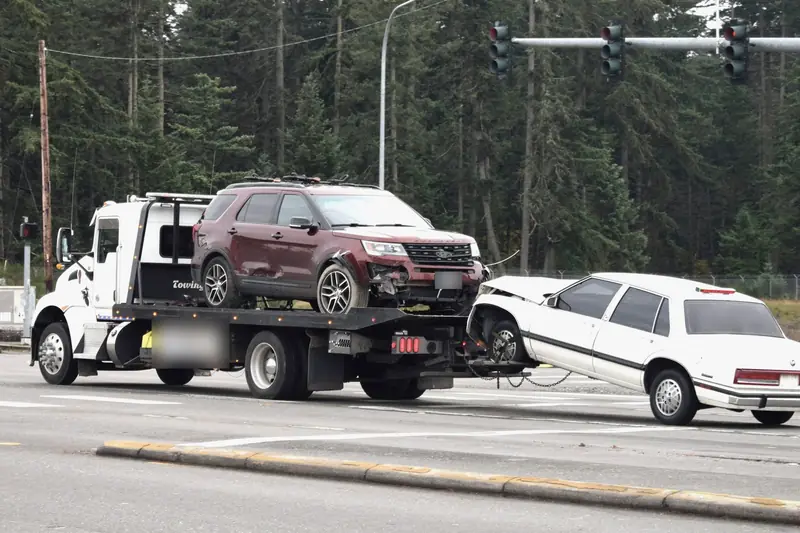
Both are legal tow trucks in California. The Vehicle Code definition of a tow truck covers equipment that moves vehicles by crane, hoist, tow bar or dolly, and adds that a roll-back carrier designed to carry up to two vehicles is also a tow truck (§615). A third method, the old sling or chain-and-strap rig, is the one owner's manuals tell you to avoid: the manuals we read say not to tow with sling-type equipment.
Match the method to your drivetrain
Front-wheel drive
The engine drives the front wheels, so those are the ones to lift. One manual we checked says it is acceptable to tow its front-wheel-drive model with the rear wheels on the ground, without dollies, as long as the front wheels are off the ground. Lifting the car from the rear, with the front wheels rolling, is the mistake to avoid.
Rear-wheel drive
The logic is reversed: the driven wheels are at the back. Some manuals allow a two-wheel-drive vehicle to be towed with the non-driven wheels on the ground. Check yours, because the conditions vary from model to model.
All-wheel drive and four-wheel drive
Every wheel can be connected to the drivetrain, so there is no "free" end to leave on the road. One carmaker's manual puts it plainly: all-wheel-drive vehicles must be towed with a wheel lift and dollies or flatbed equipment, with all the wheels off the ground. Two wheels up and two wheels down is the combination to avoid.
Electric and hybrid vehicles
When the wheels connected to an electric motor turn, the motor can act as a generator. One manual warns that towing with the front wheels on the ground can make the motor generate electricity, which may damage motor components or cause a fire. Its recommendation is wheel dollies or a flatbed. Some EVs also have a tow or transport mode that lets the car roll briefly for loading; the manual explains when to use it.
Where dollies fit in
Dollies are small wheeled platforms placed under the wheels left on the ground, so a wheel-lift truck ends up with all four wheels off the pavement. The manuals we read treat a wheel lift with dollies as an accepted alternative to a flatbed for all-wheel-drive and electric vehicles. A flatbed does the same job without extra pieces and is usually the simpler choice for a long trip or a car that does not roll.
What about flat towing behind an RV?
That is a different setup. Some owner's manuals approve towing the car with all four wheels on the ground behind a motorhome, following a specific procedure. An older manual for a compact 4WD SUV, for example, says the vehicle must be flat towed with all four wheels on the ground to avoid damage to the 4WD system, and that it must go on a flatbed or trailer if the procedure cannot be followed. The approval is model by model, and it never means two wheels on a tow truck and two on the road.
Does the method change the price?
It can. Some tow companies quote a flatbed or dollies differently from a plain wheel-lift tow. After an accident or a stolen-vehicle recovery, though, California presumes dolly fees and load and unload fees to be unreasonable (Vehicle Code §22524.5). Wherever you are, ask what method the quote includes before the truck is sent.
At Farmer's Towing, tell dispatch what your manual says and we quote with the right method from the start. Our terms list special equipment as something that can add to the price, so you hear about it on the phone, not at pickup. More on flatbed towing in Fresno and on how towing prices work.
Common questions
Do all-wheel-drive cars need a flatbed tow?
They need all four wheels off the ground. A flatbed does that; so does a wheel lift with dollies under the other axle. The manuals we checked rule out towing an AWD car with two wheels on the road.
Can you tow an electric car without a flatbed?
Only if every wheel is off the ground, which means a wheel lift plus dollies. Towing an EV with the drive wheels rolling can make the motor generate electricity and damage it, according to one manufacturer's manual.
Is wheel-lift towing bad for my car?
Not when it matches the drivetrain. A front-wheel-drive car lifted by the front wheels is a normal tow in the manuals we read. Problems come from lifting the wrong end or towing AWD and electric cars with wheels on the road.
Where do I find the towing rules for my car?
In the owner's manual, usually in the emergency or roadside chapter under "Towing". Many manufacturers also publish the manual on their official website.
Sources
- Kia Owner's Manual (2023, U.S.), Towing: AWD vehicles with all wheels off the ground
- Kia Owner's Manual (2024, U.S.), Towing: FWD rear wheels on the ground; motor may generate electricity; no sling-type equipment
- Honda CR-V Owner's Manual (older model), Towing Your Vehicle Behind a Motorhome
- California Vehicle Code §615 (definition of tow truck, including roll-back carriers)
- California Vehicle Code §22524.5 (dolly and load/unload fees presumed unreasonable after an accident)